Can You Cook in a Rental Campervan? A Guide to Onboard Kitchen Equipment, Cooking Methods, and Safety Precautions
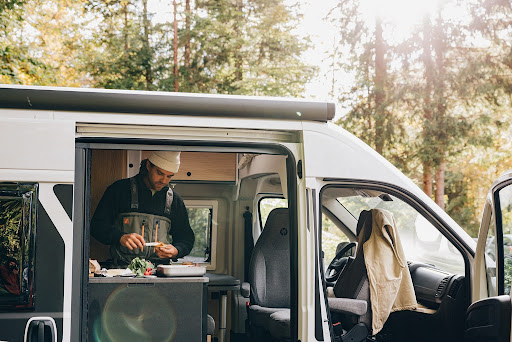
Travelling in a rental campervan does not mean giving up a good meal on the road. This guide covers onboard kitchen equipment, cooking limitations, ingredient preparation, and simple meal ideas to help you create easy, high-quality meals in a compact space.
— SUNLIGHT CAMPERVAN COOKING GUIDE
The Complete Guide to Cooking in a Campervan
Make a Good Meal Part of the Journey
Preparing a warm meal can bring a little everyday comfort to campervan travel. An egg at breakfast or a pot of soup in the evening does not need to be complicated to become a memorable part of the trip.
A campervan kitchen is different from a home kitchen, though. Worktop space, refrigeration, water and energy all need planning. The goal is to prepare meals that taste good, use manageable resources and are easy to clean up.
This guide covers equipment, site rules and safety, meal ideas, food storage and a simple menu to help you plan your first campervan cooking experience. It also offers a practical way to assess the kitchen arrangements in SUNLIGHT vehicles.
1. The Basics of Campervan Cooking
Good campervan cooking starts with matching the menu to the equipment and resources available. Rather than bringing every home-kitchen habit on the road, begin with what you need for this particular trip.
Keep the Process Simple in a Small Space
The worktop may need to accommodate the sink, hob and food preparation. Choose meals with fewer ingredients and steps, and put items away when they are not being used so that you have room to work.
Check the Actual Vehicle Equipment
Not every campervan has the same hob, fridge or power system. Confirm the equipment, suitable cookware, operating limits and cleaning procedures before choosing a menu.
Plan Water, Electricity and Gas Together
Cooking, washing up and refrigeration all use resources. Before leaving, check fresh- and wastewater capacity, power arrangements, gas supply and where you can replenish supplies or dispose of wastewater.
Familiarity with the equipment makes meal planning easier. Start with a one-pot meal, a simple breakfast or reheating prepared food.
2. Can You Cook in a Campervan? Site Rules and Safety
Check site rules, the vehicle equipment and operating instructions together. Permission to park does not automatically mean permission to cook.
When planning indoor or outdoor cooking in Taiwan, ask the site manager about overnight stays, stove use, outdoor tables and chairs, and awnings. Parking, sleeping in a vehicle and camping activities may be subject to different conditions.
Do not assume that cooking inside is always lawful or that cooking outside is always prohibited. Check the applicable local rules, posted restrictions and site permission for your intended activities.
Use Suitable Equipment and Follow Its Instructions
- Park and secure the vehicle before cooking. Do not cook while driving.
- Use equipment confirmed as suitable for the vehicle interior, following both vehicle and appliance instructions.
- Maintain the ventilation required by the instructions and keep permanent vents clear.
- Attend the hob while it is in use, keeping fabrics, paper and other combustible items away from heat.
- Do not use charcoal or outdoor-only combustion appliances inside, and do not use a cooking hob as a space heater.
- Turn off appliances and relevant valves as instructed after use. If you smell gas, stop using the equipment, avoid flames and switches that may create sparks, leave the hazardous area and seek professional assistance.
An open window or running ventilation system does not replace correct installation, maintenance and operation. Before departure, check the fire extinguisher and any fitted alarm equipment, and learn the appropriate response procedures.
3. Common Campervan Kitchen Equipment
Each item serves a different purpose. When choosing a vehicle, think about how you actually intend to cook.
| Equipment | Main Purpose | What to Check Before Departure |
|---|---|---|
| Hob | Heating and cooking | Energy source, ignition, suitable cookware and operating limits |
| Fridge | Chilled storage and freezing where fitted | Capacity, power modes, temperature and freezer space |
| Sink and water system | Washing and some food preparation | Water source, fresh- and wastewater status, and drainage |
| Drawers and cupboards | Storing ingredients, cookware and utensils | Load limits, securing arrangements and travel catches |
| Windows, rooflights or other ventilation equipment | Ventilation as designed for the vehicle | Actual equipment and the ventilation procedure required when cooking |
Assess Everyday Life through a SUNLIGHT Kitchen
SUNLIGHT campervans and motorhomes incorporate kitchen facilities into their living layouts. When viewing a CLIFF or T-series vehicle, include the hob, sink, fridge and storage flow in your practical checks.
Look beyond the number of appliances. Are ingredients easy to reach? Is there enough worktop space? Can cookware be secured properly? Does the cleanup routine fit your habits?
Equipment, capacities and layouts vary by model year, version and Taiwan-market specification. Check the actual vehicle and the information provided by the dealer. Do not assume that every SUNLIGHT model has identical facilities or working space.
4. Meals That Work Well in a Campervan
Choose simple steps, manageable cooking times, less smoke and a low washing-up burden. There is no need to prepare several dishes on your first trip.
Good Starting Points
- One-pot meals: Vegetable soup, a simple hotpot or soup with cooked rice.
- Noodles and pasta: Noodle soup or a simplified pasta dish, with water use planned around the hob and cookware.
- Light pan cooking: Eggs or vegetables with thinly sliced meat, avoiding smoky high-heat cooking and excessive oil.
- Breakfasts: Toast, eggs, fruit and a hot drink.
- Reheating prepared food: Store according to the packaging and heat thoroughly as directed.
What to Leave for Later
Deep-frying, long simmering and menus requiring several pans at once tend to increase heat management, water use and cleanup. Expand your menu after you are comfortable with the equipment.
A Simple Two-Day, One-Night Menu
| Meal | Menu Idea | Preparation Priorities |
|---|---|---|
| First evening | Tofu and vegetable hotpot with a staple food | Portion ingredients by meal and maintain the cold chain for chilled foods |
| Next morning | Egg on toast, fruit and a hot drink | Group breakfast supplies together and handle raw eggs separately from ready-to-eat food |
| Second-day lunch | Vegetable noodle soup or a meal out along the route | Decide based on remaining water, supplies and vehicle return time |
These are adaptable ideas. Plan portions and storage around your group size, equipment and food labels. Eating out can be part of the journey too; you do not need to cook every meal onboard.
5. Preparing Ingredients and Organizing Storage
Smooth cooking often depends as much on preparation and storage as on cooking skills. Use four areas—the worktop, drawers, overhead cupboards and fridge—to build a routine that works for you.
The following uses kitchen situations commonly considered when viewing vehicles such as the T 66 S as a planning framework, rather than a fixed description of every model year or version. Adjust to the actual cupboards, load limits and equipment instructions.
1. Worktop: Keep Usable Space Clear
Use the worktop for preparation, cooking and tidying rather than leaving it covered with bottles and bags. Take out only what you need and return items when finished.
Where appropriate, portion ingredients before departure, using clean containers and suitable refrigeration. Keep raw ingredients and ready-to-eat food separate, using separate or properly cleaned utensils to avoid cross-contamination.
If the hob or sink has a cover, follow its instructions. Do not assume the cover can be used as a worktop before the heat source has cooled.
2. Drawers: Give Items a Place and Secure Them
Depending on drawer dimensions and load limits, consider these groups:
- Shallow drawers: Chopsticks, spoons, forks and other cutlery.
- Tool storage: Spatulas, scissors and knives with protective covers.
- Deep drawers or lower storage: Cookware and containers within the permitted load.
Clear categories reduce searching, but dividers alone do not secure everything for travel. Put knives away safely, prevent items from sliding and check that catches are closed before driving.
3. Overhead Cupboards: Organize Lightweight Dry Goods
Lightweight dry ingredients suitable for room-temperature storage can be sealed according to their packaging instructions. Use containers to create zones, group frequently used seasonings together and avoid high stacks.
Do not place heavy items, fragile glass bottles or unsecured containers overhead simply because they fit. Follow load limits, travel-securing requirements and the vehicle instructions.
A closed cupboard does not mean its contents cannot move. Check seals, restraints and cupboard catches before setting off.
4. Fridge: Prioritize Storage Conditions before Meal Order
Do not decide shelf positions only by what you will eat tonight or tomorrow. First account for raw and cooked food separation, sealed packaging and each ingredient’s storage requirements.
- Keep cooked and ready-to-eat food separate from raw meat and other raw ingredients.
- Enclose raw meat in leakproof containers and place it where drips cannot contaminate other food.
- Once hygiene and fridge requirements are met, group containers by meal or date and label them.
- Avoid overfilling, leave the required room for cold-air circulation and check the actual chilled temperature.
- Maintain appropriate conditions for chilled ingredients during shopping and transport as well as onboard.
Safe storage comes before convenience. With a smaller fridge, preparing less and planning supply stops can be easier than carrying ingredients for the entire trip.
Connect Preparation, Cooking, Storage and Cleanup
When viewing a vehicle, simulate a meal: take ingredients from the fridge, reach the cookware, use the worktop and then plan dishes and wastewater.
For a T 66 S or another model, consider whether the actual workflow meets your needs rather than just whether equipment is present. Working space, fridge capacity and storage can vary, so compare them individually.
6. Common Beginner Cooking Mistakes
In a compact kitchen, problems often arise when preparation does not match the available space. Use these points as practical checks when viewing a CLIFF 601 or another model; specifications should always be confirmed on the actual vehicle.
1. Bringing Too Much Food without Planning Meals
A full fridge does not mean the meals are planned. List the meals you intend to cook, portion vegetables, protein and breakfast items for your group, and arrange replenishment stops.
Preparing ingredients for two or three meals can be a starting point, not a promise that all foods keep for the same time. Follow storage labels, temperature requirements and the actual itinerary.
When viewing a CLIFF 601, check fridge capacity, compartments, power modes and access rather than judging adequacy from photos.
2. Ignoring Storage and Constantly Searching for Items
Scattered seasonings and utensils interrupt cooking. Establish fixed categories, then check sealing, slip prevention and restraints.
If overhead cupboards are fitted, store suitable items within their load limits. Do not assume cupboard height or shelving alone prevents bottles from tipping over.
3. Choosing a Menu Too Complex for the Hob and Worktop
Check burner count, suitable cookware and working space before planning noodles, eggs or a simple hotpot. Smaller dishes prepared in sequence are easier to manage than several dishes at once.
Even a two-burner hob may not accommodate two large pans simultaneously. Follow the equipment instructions for cookware size and placement.
4. Forgetting Water and Wastewater
A nearby sink and hob can keep tasks together, but do not automatically reduce water use. Check fresh water, wastewater status and supply locations, and consider washing needs before cooking.
Portion food where useful, remove scraps from dishes before washing and clean appropriately. Dispose of wastewater as directed by the site, not onto the ground or into storm drains.
A useful layout works best with suitable habits. When choosing a CLIFF 601 or another SUNLIGHT, trying the workflow is more informative than reading the equipment list alone.
7. Frequently Asked Questions
Q1: Can I cook in a campervan?
Yes, if the vehicle has suitable working cooking equipment and the site permits it. Check the hob, sink, fridge and energy arrangements and follow the instructions. Permission to park alone does not establish permission to cook.
Q2: Is campervan cooking inconvenient?
A simple menu, pre-portioned ingredients and fixed storage locations reduce preparation and cleanup. A one-pot meal or simple breakfast is enough for your first trip.
Q3: Do I need lots of equipment?
Check what is supplied before adding suitable cookware, utensils and seasonings. Extra electrical appliances also require compatible power, wattage and permission to use them; a spare socket alone is not enough.
Q4: What meals work well?
Start with vegetable noodle soup, tofu hotpot, egg on toast or reheating prepared food. Avoid excessive smoke, long simmering or menus requiring several pans at once.
Q5: Is the fridge big enough?
That depends on capacity, group size, meals and supply stops. Start with a small number of portioned meals, adjust for storage requirements and avoid overfilling the fridge or blocking airflow.
Q6: Is cooking onboard safe?
An open window alone is not a safety guarantee. Use equipment suitable for the interior, maintain required ventilation, follow vehicle and appliance instructions and attend the heat source throughout. Stop using faulty equipment and contact a professional.
Q7: How should I clean up afterward?
Remove scraps first and clean according to the appliance instructions and surface materials. Allow heat sources to cool before packing away, clear food waste and rubbish, and check wastewater capacity and the designated disposal point.
Q8: Must I cook inside the vehicle?
No. For cooking indoors or outdoors, confirm site rules and that the equipment suits its location. Permission to stay overnight may not allow outdoor furniture or cooking. Do not move outdoor-only appliances inside.
Q9: Do cooking facilities differ between models?
Hobs, fridges, worktops, storage and power systems may all differ. Compare SUNLIGHT vehicles by model year, version and actual Taiwan-market specification rather than assuming identical facilities.
Q10: What matters most on a first cooking trip?
Confirm the equipment and site permission, then choose a small, manageable menu. Plan food storage, resources and cleanup together so even a simple meal feels relaxed.
8. Make a Warm Meal Part of the Trip
Campervan cooking is not about producing the largest menu. It is about using suitable equipment and preparation to bring comfortable daily routines into the journey.
A pot of soup, a simple breakfast or time to enjoy a coffee can make the moments between drives worth lingering over.
Want to explore SUNLIGHT kitchens? Contact a SUNLIGHT campervan specialist to compare actual equipment and interior layouts around your group size, cooking habits and travel plans.
*Storage arrangements and menus in this article are suggestions, not fixed specifications for every vehicle. Equipment, capacities and operating requirements depend on the model year, version, Taiwan-market specification and vehicle instructions.